Ever noticed how some letters get all the musical glory? We’ve got pianos, guitars, drums, and violins stealing the spotlight. But what about the letter O? You’d be surprised to learn there’s a whole world of fascinating musical instruments that start with O, from ancient Middle Eastern strings to futuristic electronic sounds that changed movie scores forever.
Musical instruments that start with O include the oboe, organ, oud, ocarina, and several other unique instruments spanning different cultures and time periods. These instruments range from orchestral staples like the oboe to traditional folk instruments like the oud, each offering distinct sounds and playing techniques that have shaped music across centuries.
I’ve spent years exploring unusual instruments, and the O family never fails to intrigue me. Some of these instruments have been around for thousands of years, while others were invented less than a century ago. Whether you’re a music student trying to expand your knowledge, a curious listener wanting to understand what you’re hearing in different genres, or just someone who loves learning about obscure musical facts, you’re in the right place.
Let’s explore these instruments together. I promise you’ll discover sounds you never knew existed.
The Orchestral Giants: Oboe and Organ
Oboe: The Piercing Voice of the Orchestra
The oboe is probably the most recognizable instrument on this list. If you’ve ever heard an orchestra tune up, that distinctive note everyone matches? That’s the oboe. Its penetrating, slightly nasal tone cuts through an entire ensemble, which is exactly why it gets the honor of setting the pitch.
This double-reed woodwind instrument has a conical bore and uses two pieces of cane bound together to create sound. When air passes between these reeds, they vibrate against each other, producing that characteristic timbre that composers have loved for centuries. The oboe family actually includes several variants. The oboe d’amore sits a minor third lower and has a warmer, softer sound. The oboe da caccia, rarely heard today, was a favorite of Bach’s. And the English horn, despite its misleading name, is neither English nor a horn but rather an alto oboe with a bulbous bell that gives it a melancholic quality.
Playing the oboe isn’t for the faint of heart. The embouchure (how you position your mouth and lips) requires serious muscle control. You’re working with tiny amounts of air, which means most oboists spend half their time waiting to play and the other half trying not to pass out from holding their breath. Professional oboists often make their own reeds because store-bought ones rarely match their exact needs.
The oboe has been essential to classical music since the Baroque period. Mozart, Beethoven, and Brahms all wrote stunning oboe concertos. Modern composers continue to feature it prominently, and you’ll hear it in everything from orchestral film scores to chamber music.
Organ: The King of Instruments
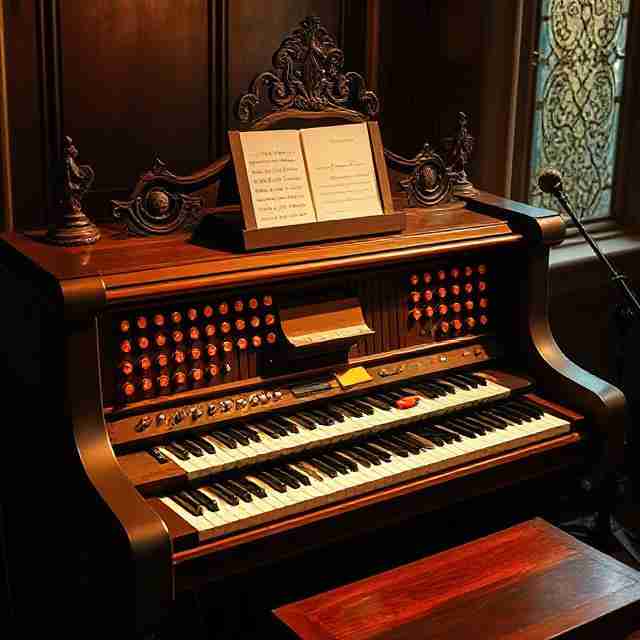
When people call the organ “the king of instruments,” they’re not exaggerating. A single organist can produce the volume and variety of an entire orchestra. Pipe organs work through a surprisingly mechanical process, pressing a key opens a valve that allows pressurized air to flow through specific pipes, creating sound. The pitch depends on the pipe’s length and diameter, while different stops (those knobs you see organists pulling) change the timbre by selecting different sets of pipes.
Church organs can have thousands of pipes ranging from smaller than a pencil to over 30 feet tall. The largest pipe organs in the world are architectural marvels. The Wanamaker Organ in Philadelphia has 28,677 pipes, making it the largest functioning musical instrument ever built.
But organs aren’t limited to churches. Theatre organs, designed for silent movie houses in the 1920s, could imitate everything from train whistles to horse hooves. The Hammond organ, invented in 1935, brought portable electronic organ sounds to jazz, gospel, and rock music. Jimmy Smith revolutionized jazz organ in the 1950s, while bands like Deep Purple and Emerson, Lake & Palmer made the organ a rock instrument in the 1970s.
Learning to play organ requires serious coordination. Your feet work the pedal board (essentially a keyboard for your feet) while your hands manage up to four manual keyboards stacked on top of each other. You’re also constantly adjusting stops to change sounds. It’s like rubbing your belly, patting your head, and solving a puzzle simultaneously.
Strings from the East: The Oud

The Grandfather of String Instruments
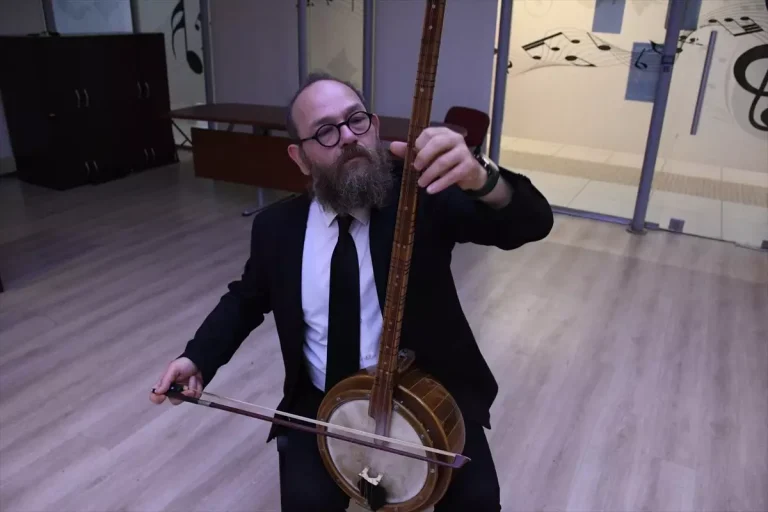
The oud might not be a household name in the West, but it’s one of the most important string instruments in human history. This pear-shaped, fretless lute has been central to Middle Eastern, North African, and Mediterranean music for over 5,000 years. The name “oud” comes from the Arabic word for wood, and many music historians believe the European lute directly evolved from it when the Moors brought the instrument to Spain during medieval times.
What makes the oud special is its warm, resonant tone and the expressiveness that comes from having no frets. Players can slide between notes, add vibrato, and achieve microtonal intervals that fixed-fret instruments simply can’t produce. This makes it perfect for the maqam system used in Arabic music, where scales include quarter tones and other intervals that fall between the notes on a piano.
The typical oud has 11 or 12 strings arranged in five or six courses (pairs of strings). Players use a plectrum called a risha, traditionally made from an eagle’s feather but now more commonly plastic. The playing technique involves both plucking and a rapid tremolo that creates a shimmering effect.
Different regions have developed their own oud styles. The Arabic oud tends to be larger with a deeper sound, while the Turkish oud is smaller and brighter. Persian (Iranian) ouds have a different tuning and playing style altogether. Famous oud players like Munir Bashir and Anouar Brahem have brought the instrument to international audiences, collaborating with Western jazz musicians and appearing on world music stages.
If you’re interested in learning the oud, be prepared for a challenge. The lack of frets means you need to develop a very precise ear. But the reward is an incredibly expressive instrument that connects you to thousands of years of musical tradition.
Ancient Winds: Ocarina
From Ancient Clay to Video Game Fame
The ocarina is one of those instruments that looks like a toy but has serious musical history. This vessel flute, meaning the entire body resonates, not just an air column, has been around for at least 12,000 years. Archaeologists have found ocarinas in ancient Mayan, Aztec, and Chinese cultures. The instrument gets its modern name from the Italian word for “little goose,” because the most common shape resembles a bird’s head.
Unlike flutes or recorders where you cover holes sequentially, the ocarina uses a different fingering system. Each hole affects the pitch independently, which means the fingering patterns feel counterintuitive at first. But this system allows for a remarkably full chromatic range from such a simple instrument.
Ocarinas come in several varieties. Transverse ocarinas are held sideways like a flute. Inline ocarinas are held straight out from the mouth. Pendant ocarinas are small, often worn as jewelry, and typically have a limited range of notes. Multi-chamber ocarinas, developed more recently, can span multiple octaves by using chambers with different pitch ranges.
The instrument’s tone is pure and haunting, somewhere between a whistle and a flute. Because of its simplicity, the ocarina has often been associated with folk music and amateur music-making. That changed dramatically in 1998 when Nintendo featured a magical ocarina as a central gameplay element in “The Legend of Zelda: Ocarina of Time.” Suddenly, kids around the world wanted to learn this ancient instrument.
Today, you can buy quality ocarinas from makers worldwide. They’re surprisingly affordable, portable, and relatively easy to get started with. The fingering system takes some getting used to, but within a few weeks, most people can play simple melodies. For travelers and hiking enthusiasts, an ocarina is perfect because it’s lightweight, durable, and doesn’t require reeds or other delicate parts.
Electronic Pioneers: Ondes Martenot and Omnichord
Ondes Martenot: The Singing Wire
In 1928, French inventor Maurice Martenot introduced an electronic instrument that would influence film scores and avant-garde classical music for decades. The Ondes Martenot (French for “Martenot waves”) produces sound through oscillating vacuum tubes, but what made it revolutionary was how expressively you could play it.
The instrument has both a keyboard and a metal ring that slides along a wire. Moving the ring lets you glide smoothly between pitches, creating an eerie, singing quality. Your left hand controls volume and timbre using a drawer-like device, allowing for incredibly nuanced expression. The result sounds somewhere between a theremin, a cello, and a human voice.
French composer Olivier Messiaen fell in love with the Ondes Martenot and wrote major works featuring it, including “Turangalîla-Symphonie.” Film composers discovered it could create otherworldly, emotional sounds perfect for science fiction and drama. You’ve probably heard it without realizing it in scores by composers like Elmer Bernstein and more recently in Radiohead’s work (Jonny Greenwood is a devoted Ondes Martenot player and even commissioned his own instrument).
Only a handful of Ondes Martenot instruments exist today because they’re incredibly difficult and expensive to build. Learning to play one means finding one of the few teachers worldwide who specialize in it. But its influence on electronic music and synthesis is undeniable. Many modern synthesizers owe their expressive capabilities to concepts pioneered by Martenot.
Omnichord: Indie Music’s Secret Weapon
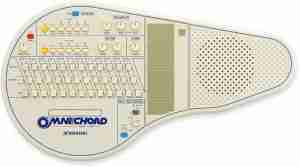
The Omnichord looks like something from a 1980s sci-fi movie, and that’s basically when it was born. Suzuki released this electronic instrument in 1981 as an easier alternative to the autoharp. Press a chord button, run your finger across the touch-sensitive plate, and you instantly get a strummed chord with accompanying rhythms and bass lines.
For decades, the Omnichord was considered a curiosity, something you’d find in a thrift store or your grandmother’s closet. Then indie and lo-fi musicians discovered it in the 2000s. Suddenly, that slightly tinny, nostalgic sound was everywhere. Artists like Sufjan Stevens, David Byrne, and countless bedroom producers incorporated the Omnichord into their recordings.
The genius of the Omnichord is its accessibility. You don’t need to know how to play an instrument to make music with it. The chord buttons are labeled, and the strumming plate responds to the lightest touch. It includes built-in drum patterns and bass accompaniment, making it a complete music-making station in one portable package.
Vintage Omnichords have become collectible, with working models selling for several hundred dollars. Suzuki discontinued the original but has released modern versions with MIDI compatibility and additional features. For anyone interested in experimental music or lo-fi aesthetics, the Omnichord offers unique sonic possibilities you won’t get from conventional instruments.
Rare and Historical Instruments
Ophicleide: The Brass Instrument Time Forgot
The ophicleide represents one of history’s evolutionary dead ends in instrument design. Invented in France in 1817, this large brass instrument with keys (rather than valves) served as the bass voice in military bands and orchestras for about 50 years before the tuba made it obsolete.
The name comes from Greek words meaning “keyed serpent,” referring to its predecessor, the serpent (an actual snake-shaped brass instrument). The ophicleide looked like an oversized metal clarinet and worked using a cup mouthpiece like other brass instruments. Its sound fell somewhere between a trombone and a tuba, with a slightly rough, powerful quality.
Composers including Mendelssohn, Berlioz, and Verdi wrote parts for ophicleide, but after the 1870s, tuba players usually performed these parts. Today, only a few specialists play the ophicleide, mainly for historically informed performances of 19th-century music. Several orchestras and period instrument ensembles have reconstructed ophicleides to perform pieces as composers originally intended.
While the ophicleide itself faded away, it represented an important step in brass instrument evolution. The key system influenced later instrument design, and the search for a powerful bass brass sound eventually led to the development of modern tubas and euphoniums.
Overtone Flute: Sacred Sounds of the Americas
The overtone flute, also called a Native American flute, has a history spanning hundreds of years across various Indigenous cultures in North America. Unlike European flutes where you control pitch mainly by covering holes, the overtone flute produces its distinctive sound through overblowing techniques that emphasize the harmonic series.
These flutes typically have a pentatonic (five-note) scale built in, making it nearly impossible to play a “wrong” note. The sound is breathy, meditative, and deeply connected to natural spaces. Traditional makers craft these flutes from river cane, cedar, or other woods, often decorating them with carvings and wrappings that hold cultural significance.
The overtone flute holds spiritual importance in many Native American traditions. Players use it in healing ceremonies, courtship rituals, and storytelling. The flute’s voice is said to carry prayers and connect the physical world with the spirit realm.
Learning the overtone flute is more about developing a relationship with the instrument than mastering technical exercises. Players focus on breath control, tone production, and improvisation rather than reading music. Modern players like R. Carlos Nakai and Mary Youngblood have brought the instrument to wider audiences through recordings that blend traditional and contemporary styles.
Modern Percussion: Ocean Drum and Orchestra Bells
Ocean Drum: Waves in Your Hands
The ocean drum is exactly what it sounds like, an instrument that mimics ocean waves. This modern percussion instrument consists of a frame drum with small beads or ball bearings sealed between two drum heads. Tilt it gently back and forth, and the beads roll across the heads, creating a sound remarkably like waves washing on shore.
Sound therapists, music therapists, and meditation practitioners love the ocean drum for its calming, continuous sound. Unlike most percussion instruments that emphasize rhythm and attack, the ocean drum creates ambient, sustained textures. You can control the intensity by changing how much you tilt it, gentle tilts create soft lapping sounds, while more dramatic movements produce stormy wave crashes.
The ocean drum works beautifully in soundscapes and experimental music. Film composers use it for beach scenes or to create atmospheric backgrounds. In educational settings, teachers use ocean drums to help children explore sound and develop listening skills. There’s something primal and comforting about the sound that seems to resonate with listeners of all ages.
While you can buy manufactured ocean drums from percussion companies, many musicians enjoy making their own. A simple frame drum, some fishing line beads or small gravel, and a second drum head are all you need. The DIY approach lets you customize the size and tone to your exact preferences.
Orchestra Bells: Sparkling Metal Magic
Orchestra bells, technically called the glockenspiel (German for “play of bells”), bring brightness and sparkle to orchestral and band music. This percussion instrument consists of metal bars arranged like a piano keyboard, played with hard mallets that produce a clear, bell-like tone.
The glockenspiel’s sound cuts through even the largest ensembles because of its high pitch and metallic timbre. Composers use it for magical effects, delicate passages, and moments requiring crystalline clarity. Think of the opening of Mozart’s “Magic Flute” or the sparkling runs in Tchaikovsky’s ballet scores.
Two main types exist: the orchestral glockenspiel, played horizontally on a stand, and the marching glockenspiel (also called bell lyre), held upright and played while marching. Marching band members often start on the bell lyre because it’s portable and helps develop mallet technique before moving to more complex percussion instruments.
Playing the glockenspiel requires precision. The small bars mean there’s little room for error in mallet placement. Professional glockenspiel players develop remarkable accuracy and speed, executing rapid passages that sound effortless but require years of practice. The instrument responds best to decisive, clear strokes rather than heavy force, you’re going for resonance, not volume.
Quick Reference: Musical Instruments Starting with O
Here’s a comprehensive comparison table showing the key characteristics of these instruments:
| Instrument | Family | Origin/Era | Skill Level | Common Genres | Approximate Cost |
|---|---|---|---|---|---|
| Oboe | Woodwind | Europe, 17th century | Advanced | Classical, orchestral, jazz | $1,500-$10,000+ |
| Organ (Pipe) | Keyboard/Wind | Ancient origins, modern form medieval | Intermediate to Advanced | Classical, sacred, theatre | $10,000-$1,000,000+ |
| Organ (Electronic) | Electronic/Keyboard | 1930s | Beginner to Advanced | Jazz, gospel, rock, pop | $300-$5,000+ |
| Oud | String | Middle East, 5,000+ years ago | Intermediate to Advanced | Arabic, Turkish, Persian, world | $300-$3,000+ |
| Ocarina | Wind | Various ancient cultures, 12,000+ years | Beginner to Intermediate | Folk, world, video game music | $20-$200 |
| Ondes Martenot | Electronic | France, 1928 | Advanced | Classical, film scores, experimental | $50,000+ (rare) |
| Omnichord | Electronic | Japan, 1981 | Beginner | Indie, lo-fi, experimental, pop | $200-$800 (used/vintage) |
| Ophicleide | Brass | France, 1817 | Advanced | Historical classical, period ensembles | Custom reproduction only |
| Overtone Flute | Wind | Native American, centuries old | Beginner to Intermediate | Traditional, meditation, world | $50-$500 |
| Ocean Drum | Percussion | Modern (20th century) | Beginner | Sound therapy, ambient, film | $30-$150 |
| Orchestra Bells | Percussion | Europe, 17th-18th century | Intermediate | Classical, marching band, orchestral | $200-$2,000+ |
Note: Prices are approximate and vary based on quality, brand, and condition. Professional instruments typically cost significantly more than student models.
Frequently Asked Questions
What is the most common musical instrument that starts with O?
The oboe is the most widely recognized and commonly used instrument starting with O. You’ll find it in virtually every professional orchestra, wind ensemble, and many chamber music groups worldwide. It’s been a standard orchestral instrument since the Baroque period and remains essential to classical music today.
Are there any O instruments suitable for beginners?
Absolutely. The ocarina is probably your best bet for a beginner O instrument. It’s affordable (starting around $20), portable, and relatively simple to learn basic melodies. The ocean drum is even easier since you just tilt it to create sound, there’s no technique to master, making it perfect for young children or people with limited dexterity. The overtone flute is also beginner-friendly because its pentatonic scale makes it almost impossible to play wrong notes.
Which O instrument is used in orchestras?
The oboe and organ both appear in orchestral settings. The oboe is a standard woodwind section member in every symphony orchestra. The organ appears in orchestral works less frequently but features prominently in pieces by composers like Saint-Saëns (his “Organ Symphony” is famous), Richard Strauss, and Gustav Holst. Orchestra bells (glockenspiel) are also standard percussion instruments in orchestras, adding sparkle and brilliance to countless compositions.
What is the oldest instrument starting with O?
The ocarina and overtone flute both have ancient origins dating back thousands of years. Archaeologists have found clay vessel flutes similar to ocarinas in sites from Central America and China dating back 12,000 years. Flutes made from bone and wood have been found in various ancient cultures across the Americas. The oud’s history stretches back around 5,000 years to ancient Mesopotamia, making it one of the oldest string instruments still commonly played today.
Where can I buy or learn these instruments?
Your options vary depending on which instrument interests you. For common instruments like oboes and orchestra bells, visit music stores or online retailers like Woodwind & Brasswind, Sweetwater, or Musician’s Friend. Ocarinas are available from specialized makers like STL Ocarina or Mountain Ocarinas. Ouds can be purchased from Middle Eastern music shops or online stores like Arabic Instruments or Sala Muzik.
For learning, YouTube offers free tutorials for most of these instruments. The ocarina, overtone flute, and ocean drum have especially strong online communities with teaching resources. For oboe, organ, or oud, you’ll want to find a private teacher or music school because these instruments require proper technique from the start to avoid developing bad habits.
The Beauty of Exploring O Instruments
What strikes me most about instruments that start with O is how they represent the full spectrum of human musical creativity. We’ve got ancient clay ocarinas that connected Mayan priests to their gods, massive pipe organs that took decades to build and fill entire cathedrals with sound, and electronic oddities from the 20th century that predicted where music technology would go.
Each of these instruments tells a story, not just about music, but about the people who created them and the cultures they come from. The oud carries centuries of Middle Eastern poetry and emotion in every note. The oboe’s reedy voice has been expressing human longing since Baroque composers first wrote for it. Even the quirky Omnichord represents a particular moment in the 1980s when technology seemed like it could make music accessible to everyone.
If you’re curious about any of these instruments, I encourage you to seek them out. Listen to recordings. Watch videos of skilled players. If possible, find one to try yourself. You might discover that the warm, woody voice of an oud speaks to something deep in your musical soul. Or maybe the meditative quality of an overtone flute becomes your new favorite sound for relaxation. Perhaps you’ll fall in love with the oboe’s expressive voice and dedicate yourself to mastering its challenging technique.
Music is bigger than just the instruments we see on mainstream stages. These O instruments remind us that every culture, every era, and every innovation has contributed to the incredible variety of sounds humans have learned to create. That’s something worth celebrating, exploring, and sharing with others who love discovering new sonic possibilities.
If you enjoyed reading this article, explore musical instruments that start with N for more information on the lexicon of musical instruments.
Now go forth and explore. Your ears will thank you.
About the Author