Explore The Musical Instruments That Start With M
Imagine a caveman taps a rhythm on a hollow log. A composer in Vienna pens a note for a soaring symphonic piece. A street musician strums a catchy tune on a bustling corner. What connects these moments across millennia and continents? The simple, profound power of musical instruments. And if you’ve ever wondered about the specific world of musical instruments that start with M, you’re in for a treat. This single letter introduces us to a stunningly diverse family of sound-makers, from ancient rhythm-keepers to modern melodic wonders.
This isn’t just a dry list. Think of it as a backstage pass to explore the stories, sounds, and secrets of these incredible instruments. So, let’s warm up and dive into the melodic world of “M”.
Percussion Powerhouses (The Rhythm of ‘M’)
If music were a body, percussion would be its heartbeat. It’s the foundation, the pulse that makes you tap your foot. The letter “M” gives us some of the most iconic and globally beloved percussion instruments out there.
The Marimba: A Wooden Orchestra
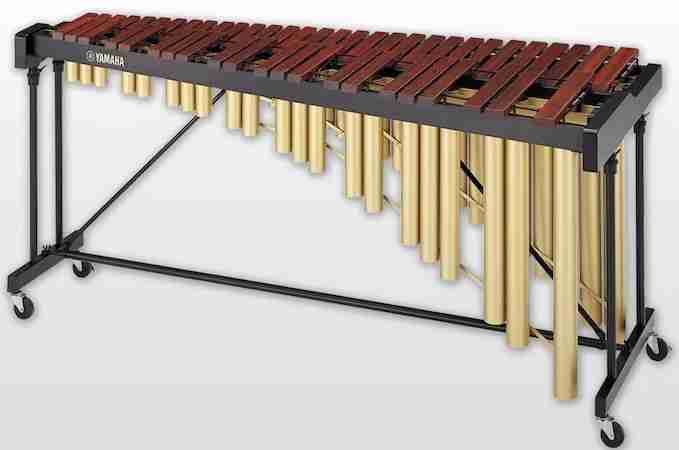
First up is the majestic marimba. Imagine a giant, sophisticated xylophone with rich, mellow tones. The marimba is exactly that, a pitched percussion instrument with rows of wooden bars, each sitting over a resonator (usually a metal tube) that amplifies its sound, giving it a warm, lingering ring.
Where did it come from? Its ancestors can be traced back to Africa and, independently, to ancient Mesoamerica. The modern marimba as we know it in orchestras and concert halls was largely developed in Guatemala. It’s a national symbol there and a source of immense cultural pride.
How is it used? Don’t let its wooden bars fool you; the marimba is a virtuoso’s dream. You’ll hear its soulful, resonant voice in symphony orchestras, wind ensembles, and as a stunning solo instrument. A skilled player, using mallets wrapped with yarn or cord, can make it sing with breathtaking speed and emotion, producing everything from simple melodies to complex, harmonious chords. According to the Smithsonian Institution, the marimba is a prime example of an instrument that traveled across the Atlantic through the transatlantic slave trade, evolving into the beautiful concert instrument we know today.
The Maracas: The Sound of Celebration
Now, let’s shift to something smaller but no less essential: the maracas. These are the quintessential shaken idiophone, a fancy term for rattles. A typical maraca is a dried gourd or a synthetic shell filled with seeds, beads, or pebbles, attached to a handle.
Where did they come from? Maracas are indigenous to Latin America, with roots among tribes in Puerto Rico, Venezuela, and Brazil. They were originally used in rituals but were quickly adopted into the vibrant folk and popular music of the region.
How are they used? You simply can’t imagine salsa, cumbia, or cha-cha without the distinctive chik-chik sound of maracas. They provide a constant, textured rhythm that lays the groundwork for the rest of the band. While they seem simple, professional players have incredible control, producing a variety of sounds from short, sharp shakes to long, rolling sustains.
The Mbira: Africa’s Thumb Piano
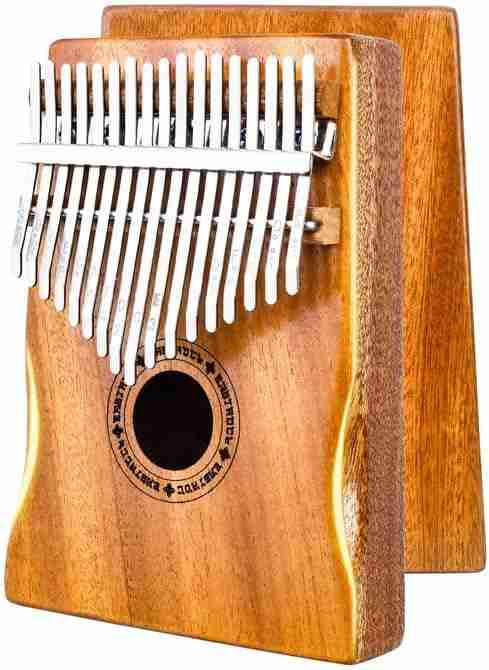
Also known as a thumb piano or sanza, the mbira is one of the most spiritually significant musical instruments that start with M. It consists of a wooden board (often mounted on a resonator like a calabash) with attached metal tines of varying lengths. The player plucks the ends of these tines with their thumbs and sometimes a forefinger.
Where did it come from? The mbira is deeply rooted in the traditions of the Shona people of Zimbabwe and Malawi. For centuries, it has been used to communicate with ancestral spirits, a practice known as bira. The intricate, interlocking patterns of its music are often described as cyclical and hypnotic.
How is it used? The mbira is not just an instrument; it’s a vessel for history and spiritual connection. Its mesmerizing sound has also found a place in modern world music, influencing artists across the globe. As described by musicologist Paul F. Berliner in his seminal book The Soul of Mbira, the instrument is central to the spiritual and social life of the Shona people, demonstrating how a simple instrument can hold profound cultural power.
The Mridangam: The Heartbeat of South India
Our final stop in the percussion section is the mridangam, the primary rhythmic accompaniment in South Indian Carnatic music. This is a double-headed, barrel-shaped drum, and it’s a true marvel of craftsmanship.
Where did it come from? The mridangam has a long, sacred history in India, with references in ancient Hindu scriptures and temple carvings. Its name is derived from the Sanskrit words mṛda (clay or earth) and aṅga (body), pointing to its original construction from baked clay.
How is it used? The mridangam is far more than a drum; it’s a sophisticated language of rhythm. Its two heads are tuned to specific pitches, and the player uses their fingers and palms to produce a vast vocabulary of strokes (bol). A master player can create complex mathematical rhythmic cycles (thalams) that converse, complement, and challenge the main melody instrument. It is the unwavering, intellectual heartbeat of the ensemble.
Stringed Splendor (The Harmony of ‘M’)
Now, let’s move from rhythm to melody and harmony. The string family is where many people find their first musical love, and the musical instruments that start with M in this category are absolutely charming.
The Mandolin: Sunshine in String Form
With its teardrop-shaped body and bright, chirpy tone, the mandolin is instantly recognizable. It’s a small lute-family instrument, typically with eight strings arranged in four paired courses (that means the two strings in each pair are tuned to the same note and played together).
Where did it come from? The mandolin evolved from the lute family in Italy during the 17th and 18th centuries. The Neapolitan bowl-back mandolin is the classic model, but the modern flat-back or carved-top mandolin we often see today was perfected in the United States.
How is it used? The mandolin is incredibly versatile. In classical music, Vivaldi wrote stunning concertos for it. In American folk traditions, it’s a cornerstone of bluegrass, where its rapid-fire tremolo picking drives the music forward. It also pops up in Celtic folk music and even some rock and pop. Its bright, penetrating sound helps it cut through the texture of a larger band.
Learn more about best beginner mandolins.
Mandola & Mandocello: The Big Siblings
What do you get when you make a mandolin bigger and lower its tuning? You get its wonderful family members! The mandola is like the viola to the mandolin’s violin, offering a warmer, deeper voice. The mandocello is larger still, providing a rich, cello-like bass line. Together, they can form a complete mandolin ensemble or orchestra, creating a beautiful and full-bodied sound.
A Quick Honorable Mention
While we’re exploring stringed instruments, it’s worth a brief nod to one that doesn’t technically start with ‘M’ but is so foundational that it demands a tip of the hat: the Oud (pronounced like “food”). In Arabic, its full name is al-ʿūd (العود), which literally means “the wood.” This ancient, fretless instrument is the great-grandfather of the European lute and, by extension, instruments like the mandolin. So, in a way, the spirit of “M” is embedded in the history of strings!
Wind & Brass (The Breath of ‘M’)
Wind and brass instruments are all about the power of human breath. They can be triumphant, mournful, or playful. While the letter “M” offers a slightly smaller club here, the members are truly unique and influential.
The Melodica: The Pocket-Sized Piano You Blow
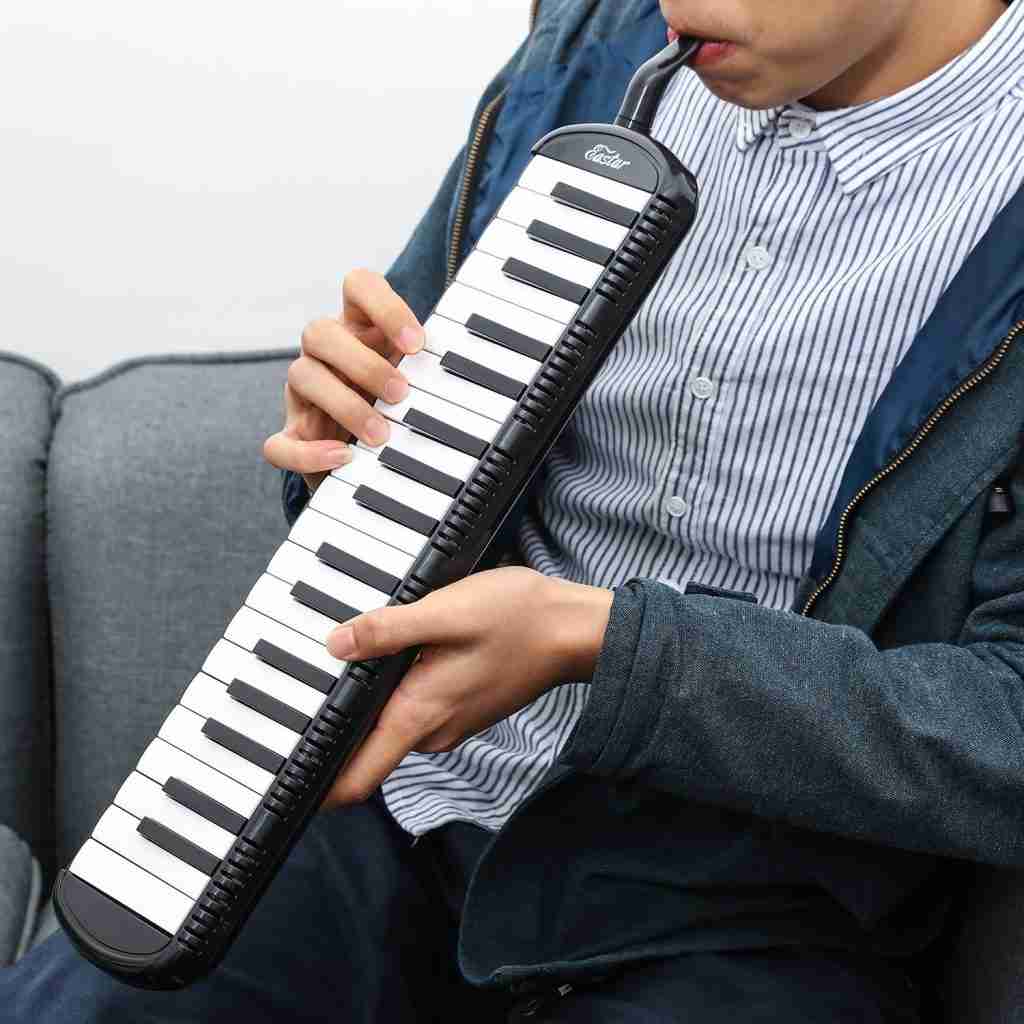 The melodica is a wonderfully quirky and accessible instrument. It looks like a small keyboard, but you play it by blowing air through a mouthpiece. The air flows over reeds, much like in a harmonica, to produce sound. It’s a free-reed instrument.
Where did it come from? The melodica was invented in the 1950s, likely in Germany or Italy, as an educational tool. It was cheap, portable, and easy to learn for beginners.
How is it used? While it started in schools, the melodica found its way into professional music. It’s a staple in reggae and dub music, thanks to legendary artists like Augustus Pablo. You’ll also hear its distinct, breathy tones in indie folk, pop, and jazz. It’s the perfect instrument for a musician who is primarily a pianist to add a wind-like melody to a track.
Musical Instruments That Start With ‘M’: A Fact Sheet
An overview of the instruments covered in this article.
| Instrument Name | Instrument Family | Key Feature & Origin |
|---|---|---|
| Marimba | Percussion (Pitched) | Wooden bars with resonators for a warm tone. Origin: Africa/Guatemala. |
| Maracas | Percussion (Shaken) | Handheld rattles for rhythmic texture. Origin: Latin America. |
| Mbira | Percussion (Plucked) | Metal tines plucked by thumbs; hypnotic sound. Origin: Zimbabwe. |
| Mridangam | Percussion (Drum) | Double-headed barrel drum; complex rhythms. Origin: South India. |
| Mandolin | Strings | 8-stringed, teardrop shape; bright sound. Origin: Italy. |
| Mandola | Strings | Larger, lower-pitched version of the mandolin. |
| Melodica | Wind (Free-reed) | Keyboard you blow into; portable & reedy. Origin: 1950s Europe. |
From Medieval to Modern (The Evolving ‘M’)
The story of musical instruments that start with M isn’t just about what’s popular today. It’s a journey through time, from the courts of medieval Europe to the digital studios of the 21st century. This is where we see how innovation and tradition have both left their mark.
A Nod to the Medieval: The Musette
Let’s step back in time to the elegant, and often loud, world of medieval music. While many instruments from that era have funny, archaic names, one that stands out is the musette.
What was it? The musette was a type of bagpipe that was all the rage in French high society during the 17th and 18th centuries. Unlike its rustic Scottish cousin, the musette was a refined, delicate instrument. It featured a small bag, often covered in luxurious velvet or silk, and a set of pipes that included a melody pipe (chanter) and drone pipes, all powered by a delicate bellows held under the arm.
Its Role in Music: The musette was the instrument of aristocrats. It was perfectly suited for playing the graceful, pastoral dance tunes popular in the royal courts. Its name even gave us the “musette dance,” a slow, duple-meter piece that evokes a shepherd’s idyllic life. It’s a beautiful example of how an instrument we might associate with folk music was transformed for the elite.
Leaping to the Modern: The Theremin’s Eerie Magic
Now, let’s make a giant leap forward to the 1920s for one of the most futuristic and spellbinding musical instruments that start with M, the theremin. Named after its Russian inventor, Léon Theremin, this instrument is pure magic. It’s the only one in the world you play without touching.
How does it work? The theremin has two metal antennas that create an electromagnetic field. One antenna controls pitch (vertical), and the other controls volume (horizontal). By moving your hands in the air near these antennas, you interrupt the fields, creating those iconic, wavering, eerie sounds. It sounds like science fiction because, for its time, it was.
Its Place in Music: The theremin’s voice is unmistakable. It became a staple in 1950s sci-fi movie soundtracks, creating a sense of otherworldly suspense. But it’s also a serious concert instrument, and its haunting sound has been used by bands like The Beach Boys (“Good Vibrations,” though that was a similar instrument called the Tannerin) and Led Zeppelin. Playing it well requires an incredible ear and steady hands, making it one of the most difficult instruments to master.
The Digital Revolution: The MIDI Controller
No discussion of modern musical instruments that start with M would be complete without the MIDI controller. Now, I can hear the purists asking, “Is it really an instrument?” And the answer is a resounding yes.
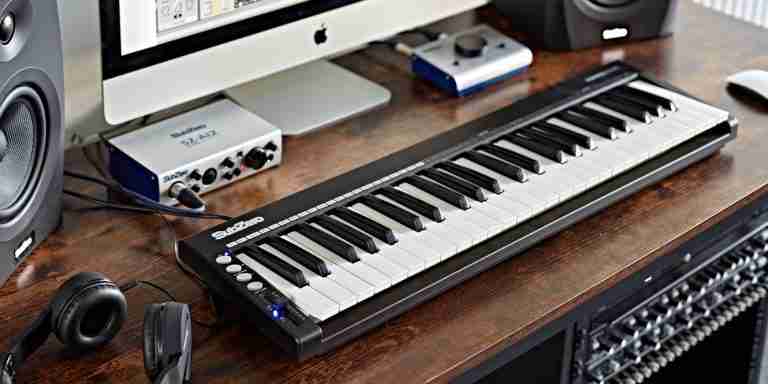
What is it? MIDI stands for Musical Instrument Digital Interface. It’s a technical standard that allows electronic instruments and computers to talk to each other. A MIDI controller itself doesn’t make a sound. It’s usually a keyboard, pad grid, or guitar that sends performance data, like what note you played, how hard you pressed it, and for how long, to a computer or sound module, which then produces the actual sound.
Why is it Revolutionary? The MIDI controller is the workhorse of the modern music studio. It has democratized music production, allowing anyone with a laptop and a cheap controller to access a universe of sounds, from perfect grand pianos to synth pads that have never existed before. As the MIDI Association explains, this standard, developed in the early 1980s, completely transformed how we create, record, and perform music. It’s arguably one of the most impactful innovations in music history.
More Marvelous M Instruments (A Quickfire Round)
We’ve covered the major categories, but the letter “M” is remarkably generous. Here’s a quickfire round of other fantastic musical instruments that start with M that deserve a shout-out.
The Melodeon: A small, button-based accordion popular in folk music across Europe and the Americas. It’s a bellow-driven, free-reed instrument that’s incredibly portable and perfect for a good knees-up.
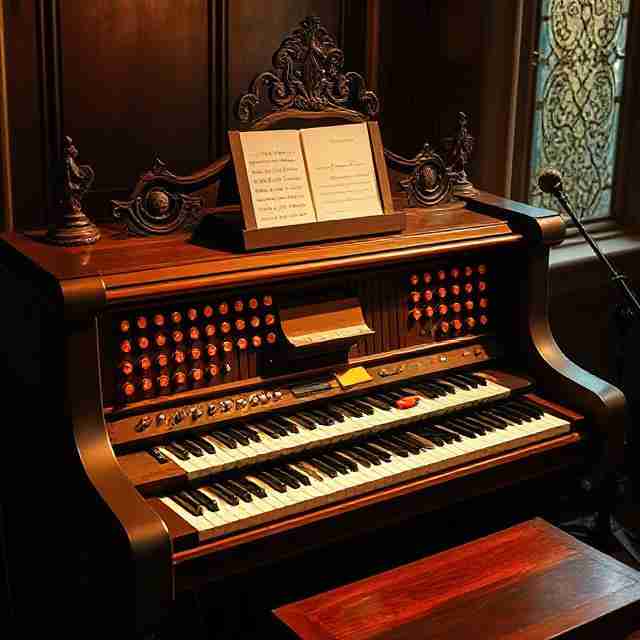
The Mighty B3 Organ: Ask any rock or jazz fan about the Hammond B3 organ, and they’ll get a gleam in their eye. While “Hammond” is the brand, its mighty sound is iconic. With its distinctive rotating Leslie speaker, it can produce everything from soul-shaking chords in a gospel church to soaring solos in a classic rock anthem.
The Mazhar: A large, heavy frame drum used in the Middle East, similar to a riq but larger. It’s covered with skin on one side and has pairs of cymbals inside, making it a powerful percussion instrument for folk and ceremonial music.
The Marimba’s Cousins: Remember the marimba? It has family members like the xylophone (with brighter, sharper wooden bars) and the glockenspiel (with metal bars, sometimes called “orchestral bells”). While their names don’t start with ‘M’, they belong to the same percussive family tree.
Conclusion: The Magnificent Symphony of ‘M’
Well, there you have it, a grand tour through the world of musical instruments that start with M. From the wooden resonance of the marimba to the digital potential of a MIDI controller, it’s been quite a journey, hasn’t it?
It’s truly remarkable how one letter can represent such a vast spectrum of sound and culture. We’ve felt the ancient, spiritual pulse of the mbira, danced to the bright chatter of the mandolin, been mesmerized by the theremin’s ghostly wail, and acknowledged the humble power of the maracas. This list is more than just a collection of names; it’s a testament to humanity’s endless creativity in our quest to make music.
The next time you’re listening to a piece of music, whether it’s a classical symphony, a bluegrass standard, or the latest pop hit, I encourage you to listen closely. See if you can pick out the voice of one of these magnificent ‘M’ instruments. You might be surprised by what you discover. If you enjoyed reading this article, explore musical instruments that start with L to learn more about the lexicon of musical instruments.
Now, I’d love to hear from you. Did we miss your favorite musical instrument that starts with M? Maybe you’ve even played one of these yourself! Share your stories and favorites in the comments below. Let’s keep the conversation going