Musical Instruments That Start With D: Learn 19 Drums, Flutes, and String Instruments
Ever noticed how some of the world’s most captivating sounds come from instruments whose names start with the letter D? From the thunderous boom of African djembes to the haunting drone of Australian didgeridoos, musical instruments that start with D represent an incredible diversity of cultures, sounds, and playing styles. Whether you’re a music student building your knowledge, a curious listener expanding your horizons, or a musician looking for your next instrument to learn, this guide covers everything you need to know about D instruments from around the globe.
The letter D gives us some truly remarkable instruments spanning every major category: percussion powerhouses like drums and darbukas, stringed beauties like dulcimers and dombras, wind instruments like the dizi and duduk, and even modern innovations like digital pianos. These instruments have shaped musical traditions across six continents, and many continue to evolve in contemporary music today.
Let me walk you through this fascinating world of D instruments, sharing what makes each one special, where they come from, and what they sound like.
The Mighty Percussion Family: Drums and Beyond
Djembe: West Africa’s Talking Drum
The djembe stands as one of the most recognizable musical instruments that start with D. This goblet-shaped drum originated in West Africa, specifically among the Mandinka people of Mali, and its name comes from the saying “Anke djé, anke bé” which means “everyone gather together.”
What makes the djembe special is its incredible range. A skilled player can coax three distinct tones from this single drum: a deep bass when you strike the center, sharp slaps at the edge, and open tones in between. The drum itself is carved from a single piece of hardwood (traditionally from the lenke tree) and topped with shaved goatskin stretched tight with rope.
You’ll hear djembes in traditional West African ceremonies, modern drum circles, and even in contemporary music recordings. The instrument has gained massive popularity worldwide since the 1950s, partly because it’s incredibly expressive and partly because it’s approachable for beginners while offering endless depth for master drummers.
Darbuka: The Goblet Drum of the Middle East
Also called a doumbek or tabla, the darbuka brings the heartbeat to Middle Eastern and North African music. This single-headed drum looks similar to a djembe but typically features a metal or ceramic body instead of wood.
Traditional darbukas used fish or goat skin for the drumhead, but modern versions often use synthetic materials that aren’t affected by humidity. This makes them more reliable for performance and easier to maintain. Players tuck the drum under one arm or rest it on their lap, using their fingers and palms to create intricate rhythms.
The darbuka produces two main sounds: the deep “doum” from striking the center and the crisp “tek” from hitting near the edge. Master players can perform lightning-fast finger rolls that sound like they’re playing multiple drums at once. You’ll find darbukas in Arabic classical music, Turkish folk songs, belly dance performances, and increasingly in world music fusion projects.
Dhol: The Double-Headed Dance Drum
When you hear the energetic beats driving a bhangra celebration or a Punjabi wedding, that’s probably a dhol. This barrel-shaped drum from South Asia features two heads of different sizes, creating a perfect bass and treble combination.
The dhol player uses two sticks: a heavy beater called a dagga for the bass side and a lighter, curved stick called a tilli for the treble side. This allows for complex polyrhythmic patterns that get people moving. The drum hangs from the player’s shoulder with a strap, leaving both hands free to create those infectious rhythms.
While the dhol has deep roots in Indian and Pakistani folk music, it’s become a global phenomenon. You’ll hear it in modern Punjabi pop, at sports events in the UK, and even in some Western pop productions looking for that distinctive South Asian flavor.
Dholak: The Hand Drum of Indian Music
Think of the dholak as the dhol’s smaller, more versatile cousin. This barrel-shaped drum also has two heads, but unlike the dhol, it’s played entirely with the hands rather than sticks. One head is typically smaller than the other, giving you that same bass-treble split but with a gentler, more nuanced sound.
What’s fascinating about the dholak is how musicians customize its sound. Many players apply a mixture of tar, clay, and sand to the bass head, creating a deeper, more resonant tone. The treble head stays clean and tight for sharp, crisp sounds.
The dholak shows up everywhere in South Asian music: classical concerts, devotional music, folk songs, Bollywood film soundtracks, and local celebrations. It’s portable, affordable, and incredibly expressive, which explains why it remains one of the most popular percussion instruments in India, Pakistan, and Nepal.
Dundun: The Bass Foundation
In traditional West African ensembles, while the djembe gets the spotlight with its flashy solos, the dundun family provides the backbone. These cylindrical bass drums come in three sizes, each with its own name and role.
The largest is the dundunba, which plays the slowest, deepest patterns. The medium sangban adds interlocking rhythms in the middle register. The smallest kenkeni plays the fastest, highest patterns. Together, they create a rhythmic foundation that’s both powerful and hypnotic.
Players strike dunduns with sticks while the drums sit horizontally on stands. Many dunduns have metal bells attached to them, and players strike both the drumhead and the bell to create complex polyrhythmic textures. You’ll find these drums essential to traditional ceremonies in Mali, Guinea, Burkina Faso, and throughout West Africa.
Strings That Sing: Plucked and Hammered Beauties
Dulcimer: Two Instruments, One Name
Here’s where things get interesting. The word “dulcimer” actually refers to two completely different musical instruments that start with D, and they’re both wonderful in their own way.
The Hammered Dulcimer looks like a trapezoidal wooden box with strings stretched across it. Players use small wooden hammers to strike the strings, creating a shimmering, bell-like sound. This instrument has ancient roots, with versions appearing in Persia, China (where it’s called a yangqin), and across Europe. The sound is bright and sustaining, almost like a cross between a piano and a harp.
The Appalachian Dulcimer (also called a mountain dulcimer) is a different beast entirely. This hourglass-shaped instrument sits on your lap, and you pluck or strum its three to five strings with your fingers or a pick. Meanwhile, you press down on the frets with a noter (a small stick) or your fingers. The result is a sweet, droning sound that’s become synonymous with American folk music.
Both dulcimers are surprisingly accessible for beginners. The Appalachian dulcimer especially has a forgiving learning curve because of its diatonic fretting pattern. You can play simple melodies within your first hour of trying.
Dombra: Kazakhstan’s National Treasure
The dombra holds a special place in Kazakh culture. This two-stringed lute isn’t just an instrument; it’s a symbol of national identity. Traditional storytellers called zhyraus used dombras to accompany epic poems and historical tales, keeping centuries of oral tradition alive.
The instrument features a long neck attached to a pear-shaped or triangular body. Players pluck or strum the two strings (traditionally made from sheep gut, now usually nylon) to create melodies and rhythmic accompaniment simultaneously. The sound is gentle yet penetrating, perfect for both intimate gatherings and larger performances.
What’s remarkable is how much expression players coax from just two strings. Skilled dombra musicians use various plucking techniques, harmonics, and percussive slaps on the body to create rich, complex music. The instrument experienced a major revival after Kazakhstan gained independence in 1991, and today you’ll find it taught in music schools and featured in both traditional and contemporary Kazakh music.
Dotara: The Two-Stringed Folk Hero
Don’t confuse the dotara with the dombra, even though they share some similarities. The dotara is primarily found in Bengal, spanning both Bangladesh and the Indian state of West Bengal. Its name literally means “two strings” in Bengali, though you’ll sometimes find versions with four or five strings.
The dotara has a distinct sound that’s rawer and more rustic than its Central Asian cousins. It’s the instrument of choice for Baul mystics, wandering musicians who sing philosophical and devotional songs. The dotara’s drone-like quality provides the perfect backdrop for these contemplative lyrics.
Players typically use a plucking technique with their index finger while the thumb provides rhythmic drone notes. The result is a hypnotic, meditative sound that can range from melancholic to ecstatic. In recent years, Bengali fusion bands have started incorporating the dotara into rock and contemporary music, giving this ancient instrument a modern voice.
Dan Bau: Vietnam’s One-String Wonder
Imagine creating entire melodies, complete with vibrato and pitch bends, using just one string. That’s the magic of the dan bau, a Vietnamese monochord that produces some of the most expressive sounds you’ll ever hear from a stringed instrument.
The dan bau consists of a single string stretched across a wooden soundbox with a flexible rod attached to one end. Players pluck the string with one hand while gently pressing the rod with the other, changing the string’s tension and bending the pitch up and down. This technique allows for smooth, sliding notes that can mimic the tonal inflections of the Vietnamese language.
The sound is hauntingly beautiful, capable of expressing deep emotion with subtle nuances. You’ll hear the dan bau in traditional Vietnamese chamber music, folk songs, and contemporary compositions. Despite its simple appearance, mastering the dan bau takes years of practice to develop the sensitivity and control needed for truly expressive playing.
Wind Instruments: Breath Given Voice
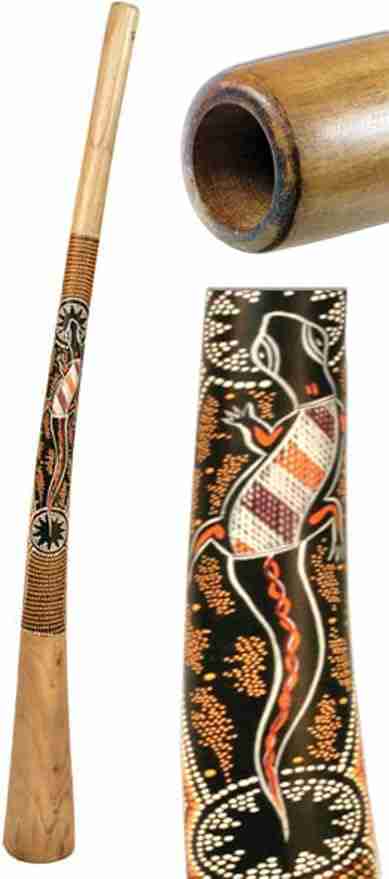
Didgeridoo: Australia’s Ancient Drone
Few musical instruments that start with D are as instantly recognizable as the didgeridoo. This long wooden tube, traditionally made from eucalyptus branches hollowed out by termites, produces a deep, resonant drone that’s unlike anything else in the musical world.
The didgeridoo originates from Aboriginal Australians in northern Australia, where it’s been played for at least 1,500 years and possibly much longer. The instrument holds deep cultural and spiritual significance for many Aboriginal groups, used in ceremonies, storytelling, and healing practices.
Playing the didgeridoo requires a technique called circular breathing, where you breathe in through your nose while simultaneously pushing air out through your mouth using your cheeks as bellows. This allows for continuous sound without breaks. Players also use their tongue, voice, and embouchure to create rhythmic patterns, overtones, and animal-like sounds within that foundational drone.
The didgeridoo has gained worldwide popularity, though this has sparked important conversations about cultural appreciation versus appropriation. If you’re interested in learning, many Aboriginal artists and teachers offer instruction while sharing the cultural context that makes the instrument meaningful.
Dizi: China’s Bamboo Voice
The dizi is a Chinese transverse flute, meaning you hold it sideways like a Western concert flute. But what sets the dizi apart is its membrane hole, a special opening covered with a thin piece of bamboo or reed membrane. This membrane vibrates when you play, adding a distinctive buzzing quality that gives the dizi its characteristic bright, penetrating sound.
Traditional Chinese music uses different types of dizis for different purposes. Bangdi flutes are shorter and play in higher keys, perfect for the bright, energetic music of northern China. Qudi flutes are longer and lower, suited to the gentler, more lyrical music of the south.
The dizi appears in Chinese opera, folk ensembles, modern orchestras, and even pop music. Learning to play requires mastering breath control, finger technique, and the art of making that membrane sing just right. When played well, a dizi can be incredibly expressive, moving from whisper-soft to piercingly loud with ease.
Duduk: Armenia’s Soul in Wood
If you’ve seen movies like Gladiator or The Last Temptation of Christ, you’ve heard the duduk. This Armenian double-reed instrument produces one of the most emotionally affecting sounds in all of music: warm, woody, and deeply mournful.
The duduk is carved from apricot wood, which gives it a unique tonal quality. Unlike oboes or other double-reed instruments, the duduk uses a large, soft reed that creates a gentler, more vocal quality. Traditional Armenian music features the duduk in songs about love, loss, and the beauty of the homeland.
UNESCO recognized duduk music as a Masterpiece of the Intangible Heritage of Humanity, acknowledging both the instrument’s unique sound and its cultural importance to Armenian identity. While the duduk is challenging to play well (that soft reed requires serious breath control and embouchure strength), its sound is unforgettable.
Danso: Korea’s Student Flute
The danso is a Korean vertical bamboo flute with a notched mouthpiece. It’s smaller and simpler than many other wind instruments, which is exactly why it’s perfect for education. Korean music students typically learn the danso before progressing to more complex instruments.
The danso produces a gentle, breathy tone that’s perfect for Korean folk melodies. It typically has five finger holes on the front and one thumb hole on the back, making it relatively easy to learn basic fingerings. The sound is softer and less penetrating than a dizi or recorder, giving it a contemplative quality.
While beginners often start with the danso, skilled players create surprisingly nuanced performances, using various breathing techniques and partial hole coverings to produce ornaments, grace notes, and subtle pitch variations characteristic of Korean traditional music.
Modern Innovations
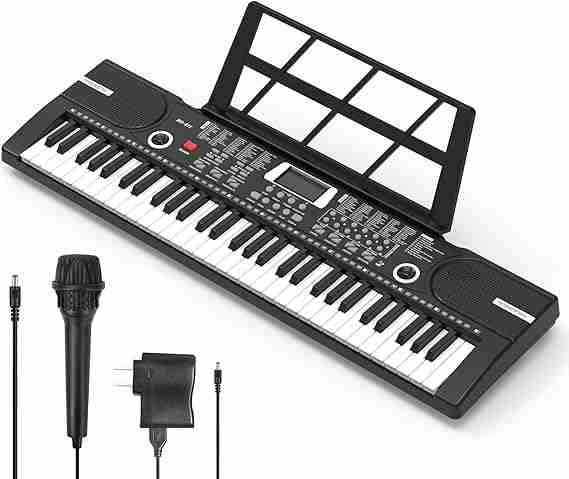
Digital Piano: Technology Meets Tradition
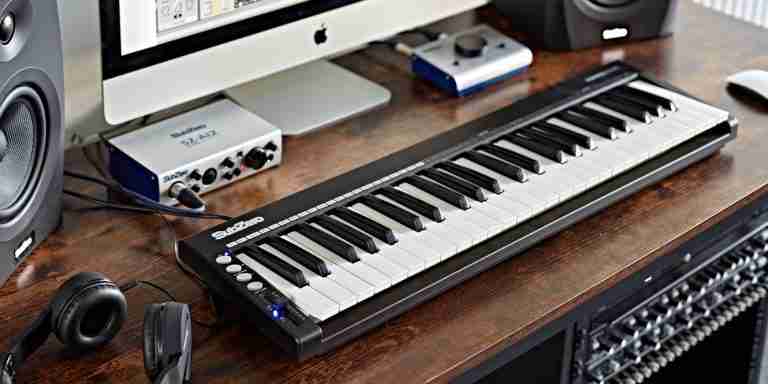
Among musical instruments that start with D, the digital piano represents our modern age. These electronic keyboards use sophisticated sampling technology to recreate the sound and feel of acoustic pianos while offering advantages that traditional pianos can’t match.
Modern digital pianos sample every note from high-quality grand pianos, capturing multiple velocity levels to reproduce the dynamic range of acoustic instruments. Better models include weighted keys with hammer action, simulating the mechanical resistance of real piano keys. Some even replicate the sympathetic resonance between strings that occurs in acoustic pianos.
The benefits are practical: digital pianos never need tuning, you can practice with headphones without disturbing neighbors, they’re portable compared to acoustic pianos, and many include additional sounds and recording features. Professional musicians use high-end digital pianos for studio work and live performance, while beginners appreciate the lower cost and maintenance-free operation.
Of course, acoustic piano purists argue that digital instruments can’t fully capture the complexity and responsiveness of a well-maintained acoustic piano. They’re right to some extent, but technology keeps improving, and for many players, digital pianos offer the perfect balance of quality and convenience.
Read the best digital pianos for home use.
Lesser-Known Treasures Worth Discovering
Daegeum: Korea’s Large Bamboo Flute
While we mentioned the danso earlier, Korea’s daegeum deserves its own spotlight. This large transverse bamboo flute produces a deeper, richer sound than its smaller cousin. The daegeum features a membrane hole similar to the Chinese dizi, giving it that characteristic buzzing resonance that cuts through ensemble textures.
In Korean traditional music, the daegeum often plays the lead melodic role, its voice floating above the other instruments. The instrument requires strong breath support due to its size, and skilled players can produce everything from powerful, piercing tones to soft, delicate phrases.
Damphu: Nepal’s Frame Drum
The damphu is a round frame drum from Nepal, particularly important in the music of the Tamang people. It looks somewhat like a tambourine but without the jingles. The frame is typically made from wood, covered on one side with animal skin.
Players hold the damphu in one hand and strike it with the other, creating rhythms that drive traditional Tamang selo songs and dances. The technique involves striking different parts of the drumhead and sometimes the frame itself to produce various tones. During Nepalese festivals and celebrations, you’ll often see groups of damphu players creating interlocking rhythmic patterns.
Dan Tranh: Vietnam’s Zither
The dan tranh is a Vietnamese zither with sixteen or seventeen strings stretched across movable bridges. It’s similar to the Chinese guzheng and Japanese koto but has its own distinct tuning and playing style.
Players pluck the strings with their right hand while using their left hand to press down behind the bridges, creating vibrato, pitch bends, and ornaments. This allows for the subtle inflections and expressive techniques central to Vietnamese music. The dan tranh appears in traditional chamber music, folk songs, and contemporary compositions.
The sound is delicate yet resonant, with a shimmering quality that can be both meditative and virtuosic. Learning the dan tranh requires developing independence between both hands and sensitivity to the subtle microtonal adjustments that give Vietnamese music its distinctive character.
Dabakan: The Philippines’ Goblet Drum
The dabakan is a single-headed goblet drum used primarily by the Maranao and Maguindanao people of Mindanao in the Philippines. The drum’s body is carved from wood in a goblet shape, with a goat or lizard skin head secured with rattan.
In traditional Filipino kulintang ensembles, the dabakan provides the rhythmic foundation while the melodic kulintang gongs play the main themes. Players use their hands to create different tones, and the drum’s deep bass provides a solid anchor for the higher-pitched instruments in the ensemble.
Quick Reference: Musical Instruments That Start With D
Here’s a comprehensive table that summarizes the key instruments we’ve covered. Feel free to bookmark this for quick reference or share it with fellow music enthusiasts:
| Instrument | Type | Origin | Key Features | Difficulty |
|---|---|---|---|---|
| Djembe | Percussion | West Africa | Goblet drum, three tones, rope-tuned | Beginner to Advanced |
| Darbuka | Percussion | Middle East/North Africa | Metal/ceramic goblet drum, finger techniques | Beginner to Advanced |
| Dhol | Percussion | South Asia | Double-headed barrel drum, played with sticks | Intermediate |
| Dholak | Percussion | South Asia | Hand-played barrel drum, tar on bass head | Beginner to Intermediate |
| Dundun | Percussion | West Africa | Bass drums in three sizes, played with sticks | Intermediate |
| Dulcimer (Hammered) | String | Middle East/Europe/Asia | Trapezoidal, struck with hammers | Intermediate |
| Dulcimer (Appalachian) | String | United States | Hourglass shape, diatonic fretting | Beginner |
| Dombra | String | Kazakhstan/Central Asia | Two-stringed lute, plucked | Intermediate |
| Dotara | String | Bengal (India/Bangladesh) | Two-stringed folk instrument | Intermediate |
| Dan Bau | String | Vietnam | One-string monochord with pitch bending | Advanced |
| Didgeridoo | Wind | Aboriginal Australia | Wooden drone tube, circular breathing | Intermediate to Advanced |
| Dizi | Wind | China | Bamboo flute with membrane hole | Intermediate |
| Duduk | Wind | Armenia | Double-reed, apricot wood, warm tone | Advanced |
| Danso | Wind | Korea | Vertical bamboo flute, simple | Beginner |
| Digital Piano | Keyboard | Modern/Global | Electronic piano with sampled sounds | Beginner to Advanced |
| Daegeum | Wind | Korea | Large bamboo flute with membrane | Advanced |
| Damphu | Percussion | Nepal | Round frame drum | Beginner to Intermediate |
| Dan Tranh | String | Vietnam | 16-17 string zither | Advanced |
| Dabakan | Percussion | Philippines | Goblet drum for kulintang ensembles | Intermediate |
Why These Instruments Matter Today
Musical instruments that start with D represent far more than just an alphabetical curiosity. They’re windows into different cultures, different ways of thinking about sound, and different approaches to musical expression.
In our interconnected world, these instruments are crossing traditional boundaries. You might hear a djembe in a jazz fusion band, a duduk in a Hollywood soundtrack, or a digital piano playing gamelan-inspired music. World music festivals, YouTube tutorials, and online communities have made these instruments more accessible than ever before.
For music educators, these instruments offer valuable teaching opportunities. The dholak introduces rhythmic concepts from Indian classical music. The Appalachian dulcimer makes music theory tangible for beginners. The didgeridoo teaches breath control and introduces circular breathing concepts.
For listeners, exploring these instruments opens up entire musical traditions. Once you know what a dizi sounds like, you’ll start recognizing it in Chinese films and music. Understanding the darbuka’s role helps you appreciate the complexity of Middle Eastern rhythms. Each instrument becomes a key that unlocks new musical worlds.
Finding Your D Instrument
If reading this has sparked your interest in learning one of these instruments, here’s some practical advice. Start by listening extensively. YouTube, Spotify, and other platforms offer countless recordings of all these instruments. Pay attention to which sounds speak to you emotionally.
Consider practical factors too. Some instruments like the Appalachian dulcimer or djembe are relatively affordable and widely available. Others like authentic didgeridoos or high-quality dan baus might require more investment and searching. Think about your living situation as well. A digital piano with headphones won’t bother your neighbors, but a dhol definitely will.
Look for teachers in your area or online. Many of these instruments have passionate communities of players who love sharing their knowledge. Workshops, drum circles, and cultural centers offer opportunities to try before you buy.
Remember that every instrument has its own learning curve. Some, like the danso or basic djembe rhythms, offer quick wins for beginners. Others, like the duduk or dan bau, demand patience and persistence. Choose based on your interest level and available practice time.
Final Thoughts
The world of musical instruments that start with D is remarkably rich and diverse. From ancient traditions carried forward through centuries to modern innovations combining technology with musical heritage, these instruments prove that music truly is a universal language.
What strikes me most about this collection is how each instrument reflects the environment and culture that created it. The didgeridoo couldn’t exist without Australian eucalyptus and termites. The duduk’s apricot wood connects it to Armenia’s landscape. The dhol’s energetic rhythms mirror the celebratory spirit of Punjabi culture. Each instrument carries stories, history, and identity.
Whether you’re a musician looking to expand your palette, a music student diving into ethnomusicology, or simply someone who loves discovering new sounds, I hope this guide has introduced you to some instruments you’ll want to explore further. Maybe you’ll pick up a dulcimer and start playing Appalachian folk songs. Perhaps you’ll attend a djembe workshop and discover a new passion. Or maybe you’ll just listen more carefully next time you hear an unfamiliar sound in a film score or world music recording.
The beautiful thing about music is that it’s always inviting us deeper. Every instrument is an invitation to listen, learn, and connect with something beyond ourselves. So pick a D instrument that called to you while reading this, find some recordings, and let yourself be transported. You might just discover your next musical obsession.
What instrument from this list intrigues you most? I’d love to hear which one captures your imagination.