Ever find yourself scrolling through musical instrument lists and wondering what on earth starts with the letter Y? You’re not alone. While most of us can rattle off guitars, drums, and pianos without breaking a sweat, the Y category feels like uncharted territory. Here’s the short answer: most musical instruments that start with Y come from Asian cultures, particularly China, Turkey, and Korea. These include stringed beauties like the yangqin and yueqin, wind instruments like the yaylı tulum, and percussion pieces that have shaped traditional music for centuries.
I’ve spent years exploring instruments from around the world, and I’ll tell you something interesting. The letter Y might not give us a huge list, but what it lacks in quantity, it makes up for in fascinating history and gorgeous sounds. These instruments tell stories of ancient trade routes, cultural exchanges, and musical traditions that stretch back hundreds of years.
Let’s dive into this musical journey together. Whether you’re a curious music lover, a student working on a project, or someone who just loves learning about different cultures through their instruments, you’re in for a treat.
The Yangqin: China’s Hammered Dulcimer
Picture a large, trapezoid-shaped wooden box lying flat on a stand, covered with dozens of metal strings that shimmer in the light. That’s the yangqin, and it’s absolutely mesmerizing to watch someone play it.
The yangqin belongs to the hammered dulcimer family, which means musicians strike the strings with small bamboo mallets instead of plucking them. Each mallet looks like a slim stick with a slightly padded end, and skilled players can move them so fast your eyes can barely keep up. The sound? Think of a piano meeting a harp, with a bright, resonant quality that can fill an entire concert hall.
This instrument made its way to China around the Ming Dynasty, probably traveling along the Silk Road from Persia. Chinese musicians fell in love with it and made it their own, adding more strings and developing new playing techniques. Today’s yangqin typically has over 100 strings arranged in courses, with bridges dividing them to create different pitches.
You’ll hear the yangqin in Chinese orchestras, where it often plays melody lines that dance above the other instruments. It’s also a star in regional opera styles and folk music ensembles. Modern composers have written solo pieces that show off its incredible range, from delicate whispers to powerful crescendos.
Learning the yangqin takes dedication. Your hands need to develop independence, since each one holds a mallet and plays different rhythms. But the payoff is worth it. Few instruments can match its ability to express both joy and melancholy with such clarity.
The Yueqin: China’s Moon Guitar
If instruments had nicknames based on their looks, the yueqin nailed it. This Chinese lute has a perfectly round body that looks just like a full moon, which is exactly how it got its name. The word “yue” means moon, and “qin” refers to a stringed instrument.
The yueqin has a short neck and typically four strings, though you might find versions with three. Unlike a Western guitar, its body is completely circular and relatively flat, usually made from paulownia wood for the soundboard and harder woods for the back. The strings traditionally used silk, but modern versions often use nylon or steel.
Here’s where it gets interesting. The yueqin plays a crucial role in Chinese opera, especially Beijing opera and Cantonese opera. When you watch these performances, listen for the bright, plucky sound cutting through the singing and percussion. That’s the yueqin keeping the rhythm and adding melodic flourishes.
Folk musicians also love this instrument. In rural areas across China, you might stumble upon storytellers using the yueqin to accompany their tales, a tradition that goes back centuries. The instrument has this wonderful ability to project sound despite its relatively small size, making it perfect for outdoor performances.
Playing the yueqin involves plucking the strings with your fingers or a plectrum. The frets are high and positioned to allow for the sliding techniques that give Chinese music its characteristic sound. Some players can make the yueqin “sing” by bending notes and adding vibrato that sounds almost vocal.
The Yangeum: Korea’s Answer to the Hammered Dulcimer
Korea has its own version of the hammered dulcimer, and it’s called the yangeum. While it shares DNA with the Chinese yangqin, the yangeum developed its own personality in Korean traditional music, known as gugak.
The yangeum looks similar to its Chinese cousin but typically has a slightly different construction and tuning system that suits Korean musical scales. Musicians strike the metal strings with bamboo sticks, creating sounds that blend beautifully with other traditional Korean instruments like the gayageum and geomungo.
In Korean court music, the yangeum added a sparkling texture that complemented the deeper, more resonant instruments. It could play both melody and rhythmic accompaniment, making it incredibly versatile. Modern Korean traditional music ensembles still feature the yangeum prominently, especially in pieces that aim to showcase the full range of gugak instruments.
What makes the yangeum special in Korean culture is its association with refined, elegant music. It was considered an instrument for the educated class, and learning to play it well was seen as a mark of cultural sophistication. Today, you can hear it in everything from traditional gugak concerts to fusion projects that blend Korean sounds with jazz or contemporary classical music.
The Yaylı Tulum: Turkey’s Singing Bagpipe

When most people think of bagpipes, they picture Scotland. But Turkey has its own bagpipe tradition, and the yaylı tulum is one of the most distinctive examples. This instrument comes from the eastern Black Sea region of Turkey, and it has a sound that’s quite different from its Scottish relatives.
The yaylı tulum consists of a bag, usually made from goat or sheep skin, and pipes that include a blowpipe, a chanter for the melody, and drones that provide continuous background notes. The bag acts as an air reservoir, allowing the player to maintain a constant sound without interruption. When played well, it creates a haunting, continuous melody that seems to float on the air.
What sets the yaylı tulum apart is its role in Turkish folk music and celebrations. At weddings, festivals, and community gatherings in the Black Sea region, the sound of the tulum announces that something special is happening. It pairs beautifully with traditional dances, providing the rhythmic and melodic foundation that gets everyone moving.
The playing technique requires serious lung power and coordination. You blow air into the bag through the blowpipe while simultaneously pressing the bag against your body to force air through the melody pipe and drones. Your fingers work the melody pipe to create the tune while the drones hum away underneath. It’s like being a one-person orchestra.
Different regions in Turkey have their own tulum variations, each with slightly different construction and tonal qualities. The yaylı tulum specifically refers to versions from certain areas, and collectors prize older instruments for their craftsmanship and unique sound characteristics.
The Yun Luo: China’s Cloud Gongs

Imagine ten small gongs arranged in a wooden frame, each tuned to a specific pitch. That’s the yun luo, which translates to “cloud gongs.” The name comes from the way the gongs are arranged in the frame, supposedly resembling clouds in formation.
Each gong in the set measures about 9 to 12 centimeters in diameter and has a raised boss in the center. Musicians strike these bosses with a padded mallet, and each gong produces a clear, bell-like tone. The gongs are arranged chromatically or diatonically, depending on the musical tradition and the piece being performed.
The yun luo adds both melody and color to Chinese orchestras. Unlike larger gongs that mark important moments with dramatic crashes, the yun luo can play actual tunes. It might carry a melody line, add decorative flourishes, or create shimmering textures that float above the rest of the ensemble.
You’ll find the yun luo in traditional Chinese music, religious ceremonies, and contemporary compositions. Modern composers love it because it brings an instantly recognizable Chinese sound to their orchestral works. Each gong has its own character, and skilled players know exactly how hard to strike each one to get the desired tone.
Playing the yun luo requires precision and a good ear. Since the gongs are relatively close together, accuracy is crucial. The best players make it look effortless, their mallets dancing across the gongs to create melodies that seem to hang in the air like, well, clouds.
The Yazheng: China’s Bowed Board Zither
The yazheng is one of those instruments that makes you stop and wonder how anyone figured out how to play it in the first place. It’s a bowed zither, which means it combines elements of stringed instruments like the guzheng with bowing techniques more commonly associated with fiddles.
This instrument has a long, narrow body with strings stretched across it. Instead of plucking the strings like you would with a guzheng, musicians use a bow to draw sound from them. The left hand presses and manipulates the strings to create different pitches and add expressive techniques like vibrato and slides.
The yazheng produces a sound that’s somewhere between a Chinese violin and a zither. It has a nasal quality that’s characteristic of many Chinese bowed instruments, but with the resonance you’d expect from a larger stringed instrument. In the right hands, it can sound incredibly expressive, almost vocal in quality.
Historically, the yazheng appears in texts about Chinese music going back centuries, though it’s less common today than some other traditional instruments. You’re more likely to encounter it in recordings of historical music or in ensembles specifically focused on preserving traditional instruments and playing styles.
Modern interest in the yazheng has grown among musicians interested in reviving rare instruments. It offers a unique sound palette that composers find intriguing, and its relative obscurity makes it attractive to musicians looking to explore less-traveled musical paths.
The Yuka Drums: Afro-Cuban Heartbeat
Now we travel from Asia to Cuba, where the yuka drums play a central role in Afro-Cuban music traditions. These drums are directly connected to African heritage in Cuba, particularly to the Bantú people who were brought to the island during the colonial period.
The yuka ensemble typically consists of three drums of different sizes, each with its own role in the music. The largest drum, called the caja, provides the deep bass foundation. The middle drum adds rhythmic complexity, while the smallest drum, often called the cachimbo, plays the most intricate patterns. All three are carved from solid tree trunks and have cowhide heads.
Yuka drumming is intimately connected to yuka dance, a traditional Afro-Cuban style that tells stories through movement and rhythm. The drums don’t just accompany the dance; they have a conversation with the dancers. The lead drummer watches the dancers and responds to their movements, creating a dynamic interaction that makes each performance unique.
You’ll hear yuka drums in rumba performances and in ceremonies that preserve African spiritual traditions in Cuba. The rhythms are complex and polyrhythmic, meaning multiple rhythmic patterns happen simultaneously. When played together, these rhythms create a dense, driving pulse that’s impossible not to feel in your body.
Learning yuka drumming means understanding not just the rhythms but the cultural context. The patterns have names and meanings, and they’re traditionally passed down through oral tradition rather than written notation. It’s music that lives in the body and the community.
The Yayli Tambur: Turkey’s Bowed Beauty
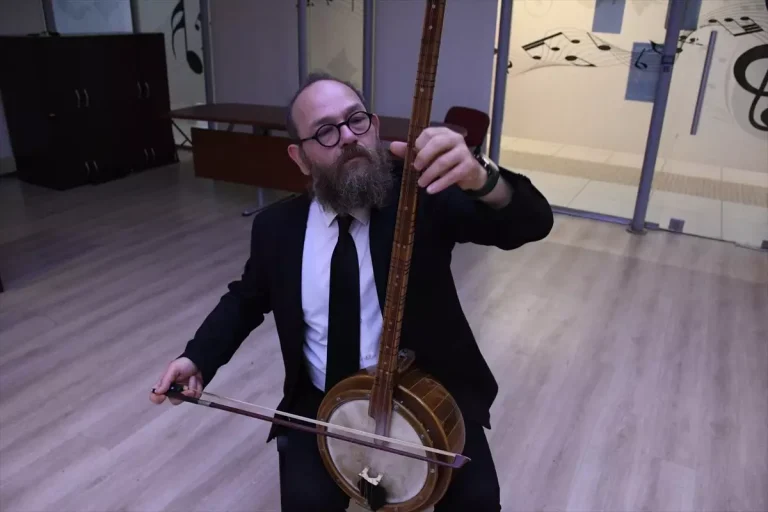
Turkey gives us another fascinating Y instrument with the yaylı tambur, a bowed long-necked lute that plays a starring role in classical Turkish music. The name literally means “bowed tambur,” distinguishing it from versions of the tambur that are plucked.
This instrument has a long, elegant neck covered with adjustable frets, and a body that’s typically made from a gourd or carved from wood to resemble a gourd. The strings, usually six or seven of them, pass over a bridge on the body and along the neck. Musicians play it with a bow, similar to how you’d play a violin, but the instrument rests on the player’s lap or knee.
The yaylı tambur excels at the makam system, the modal framework that forms the foundation of Turkish classical music. The adjustable frets allow players to fine-tune the pitches to match the specific intervals required by different makams. This precision is crucial because Turkish music uses intervals that don’t exist in Western music.
When you hear the yaylı tambur, you’re hearing centuries of Ottoman musical tradition. It has a warm, slightly nasal tone that can express incredible emotion. The best players can make it sing, using techniques like vibrato and slides to add expression that sounds almost human.
This instrument demands technical skill and deep musical knowledge. Players need to know the makam system inside and out, and they need the physical technique to produce a good tone with the bow while executing complex ornamentations with their left hand. It’s an instrument that takes years to master but rewards that dedication with expressive possibilities that few instruments can match.
Musical Instruments Starting With Y: Quick Reference Guide
Here’s a comprehensive table you can bookmark, share, or cite. This breakdown covers all the major musical instruments that start with Y, organized by type, origin, and key characteristics.
| Instrument Name | Type | Origin | Key Features | Common Usage |
|---|---|---|---|---|
| Yangqin | Hammered Dulcimer | China | 100+ metal strings, struck with bamboo mallets, trapezoidal shape | Chinese orchestras, folk music, opera accompaniment |
| Yueqin | Plucked Lute | China | Round body (moon-shaped), 4 strings, short neck | Beijing opera, Cantonese opera, folk storytelling |
| Yangeum | Hammered Dulcimer | Korea | Similar to yangqin but adapted for Korean scales | Korean traditional music (gugak), court music |
| Yaylı Tulum | Bagpipe | Turkey | Goatskin bag, melody pipe with drones | Folk celebrations, weddings, regional festivals |
| Yun Luo | Percussion (Gongs) | China | 10 tuned gongs in wooden frame, 9-12cm diameter each | Chinese orchestras, ceremonial music, contemporary compositions |
| Yazheng | Bowed Zither | China | Long board with strings played with bow | Historical Chinese music, traditional ensembles |
| Yuka Drums | Percussion (Drums) | Cuba (Afro-Cuban) | Set of 3 hand drums, carved from tree trunks | Rumba, traditional Afro-Cuban ceremonies, dance accompaniment |
| Yaylı Tambur | Bowed Lute | Turkey | Long neck, movable frets, 6-7 strings, gourd body | Turkish classical music, makam performances |
Data Notes: This table represents the most commonly recognized musical instruments beginning with Y across global musical traditions. Information compiled from ethnomusicological sources and traditional music documentation.
Why Do Most Y Instruments Come From Asia?
You’ve probably noticed a pattern here. The vast majority of musical instruments that start with Y have Asian origins, particularly from China, Korea, and Turkey. This isn’t random, and understanding why tells us something interesting about language, culture, and musical history.
First, let’s talk about language. Many of these instrument names come from Chinese characters and words that, when romanized using systems like Pinyin, start with Y. The yangqin, yueqin, and yun luo all use Chinese words that begin with specific sounds that English speakers represent with the letter Y. It’s a quirk of translation more than anything else.
Turkish follows a similar pattern. The Turkish alphabet includes words beginning with Y that describe these traditional instruments, and when we write them in English, we keep that Y at the start. The yaylı tulum and yaylı tambur both use “yaylı,” which relates to bowing or the Black Sea region, depending on context.
But there’s more to it than just linguistics. These cultures have incredibly rich musical traditions going back thousands of years. China, for example, has documented its musical instruments and practices for millennia. The depth and diversity of Chinese traditional music means there are simply more instruments overall, which increases the chances that some will start with any given letter.
The Silk Road also plays a role here. This ancient trade network didn’t just move silk and spices; it moved musical ideas and instruments too. The yangqin itself probably originated in Persia and traveled to China, where it evolved into the instrument we know today. Cultural exchanges like this created variations of instruments across different regions, each with its own name.
Korea’s position between China and Japan meant it absorbed influences from both while developing its own distinct musical identity. The yangeum shows this perfectly, related to Chinese instruments but thoroughly Korean in its application and sound.
Learning to Play Y Instruments: What You Should Know
So you’re interested in learning one of these instruments? That’s fantastic. But let’s be real about what you’re getting into.
Most musical instruments that start with Y aren’t available at your typical music store. You won’t find a yangqin sitting next to the keyboards at your local mall. These are specialty instruments that often need to be ordered from makers who specialize in traditional instruments. That means you’ll need to do research, possibly wait for construction time, and budget more than you might for a standard Western instrument.
Cost varies widely. A student-level yueqin might run a few hundred dollars, while a professional yangqin from a respected maker could cost several thousand. The yun luo, with its precisely tuned gongs, doesn’t come cheap either. However, some simpler instruments like the yuka drums can be more affordable, especially if you find local craftspeople who work in traditional Afro-Cuban music.
Finding a teacher presents its own challenge. Unless you live in or near a major city with significant Chinese, Korean, or Turkish communities, you might struggle to find in-person instruction. The good news? The internet has changed everything. Online lessons, video tutorials, and virtual instruction from teachers around the world make learning these instruments more accessible than ever before.
Cultural context matters too. These instruments developed within specific musical traditions that have their own rules, scales, and ways of thinking about music. A yaylı tambur player needs to understand makam. A yangqin player should grasp Chinese musical aesthetics. Learning the instrument means learning the culture, which is actually one of the most rewarding parts of the journey.
Start by listening. Seriously, before you invest in an instrument, spend time listening to professional performances. YouTube has incredible resources, concerts, tutorials, documentaries about these instruments. Get the sounds into your ears and your mind. Understand what good playing sounds like. This foundation will guide your learning more than anything else.
Connect with communities. Look for Facebook groups, Reddit communities, or forums focused on Chinese instruments, Turkish music, or whatever tradition calls to you. These communities can point you toward reputable sellers, recommend teachers, and provide support when you hit inevitable frustrations.
The Cultural Significance of These Instruments
Every instrument carries stories, and the musical instruments that start with Y are no exception. They’re not just objects that make sounds; they’re vessels of cultural memory, tradition, and identity.
Take the yangqin. When Chinese immigrants moved to different parts of the world, they brought their instruments with them. Today, you can find yangqin ensembles in Chinese communities across North America, Southeast Asia, and Europe. The instrument becomes a link to heritage, a way for younger generations to connect with their ancestral culture. Playing the yangqin isn’t just about making music; it’s about maintaining continuity with the past.
The yuka drums carry the weight of history in a different way. They’re physical evidence of African cultural survival in the Americas. Despite the horrors of slavery and efforts to suppress African traditions, these drums and the music they make persisted. When someone plays yuka drums today, they’re participating in an act of cultural preservation and resistance. The rhythms themselves encode knowledge and history passed down through generations.
In Turkey, the yaylı tambur represents Ottoman court culture and classical Turkish musical traditions that stretch back centuries. As Turkey has modernized and Westernized in many ways, instruments like the yaylı tambur help maintain connections to historical identity. Young Turkish musicians learning these instruments often talk about feeling rooted in something larger than themselves.
These instruments also serve as cultural ambassadors. When Western audiences hear a yangqin or yun luo in a concert, they’re being introduced to Chinese musical aesthetics. The sounds themselves carry cultural information, different scales, different approaches to rhythm and melody, different ideas about what music can and should do.
UNESCO recognizes many of these musical traditions as intangible cultural heritage, acknowledging their importance to humanity’s cultural diversity. The instruments are keys to keeping these traditions alive and vibrant.
Modern Innovations and Fusion Projects
Traditional doesn’t mean stuck in the past. Musicians around the world are finding innovative ways to bring these Y instruments into contemporary contexts, and the results are stunning.
Chinese composers have written concertos for yangqin with Western orchestras, creating pieces that blend Chinese and European classical traditions. The yangqin’s unique timbre cuts through an orchestra beautifully, and composers have figured out how to write for it in ways that highlight its strengths while meshing with violins, cellos, and brass instruments.
Jazz musicians have discovered the yangqin too. Imagine bebop lines played on a hammered dulcimer with Chinese scales mixed in. It sounds wild, but it works. The instrument’s percussive attack suits jazz rhythms perfectly, and its ability to play both melodic lines and chordal accompaniment makes it incredibly versatile.
The yaylı tambur has found its way into world music fusion projects, often paired with electronic instruments or Western string ensembles. Turkish musicians are experimenting with effects pedals and looping, creating soundscapes that are simultaneously ancient and futuristic. The instrument’s expressive capabilities and unique tonal qualities make it perfect for this kind of experimentation.
Film composers have caught on too. When a score needs to evoke a specific cultural setting or add exotic color, instruments like the yueqin, yun luo, and yangqin show up. You’ve probably heard these instruments in movies without realizing it, they’re in the background, adding authenticity and atmosphere.
Electronic musicians are sampling these instruments and manipulating their sounds to create entirely new sonic possibilities. A yun luo gong might get stretched, reversed, and layered until it becomes the foundation for a contemporary electronic track. This isn’t disrespectful to tradition; it’s tradition evolving and staying relevant.
Young musicians in China, Korea, and Turkey are pushing boundaries too. They’re playing rock music on traditional instruments, composing avant-garde pieces, and generally refusing to see their cultural instruments as museum pieces. This energy is crucial for keeping these instruments alive and meaningful to new generations.
Where These Instruments Are Heading
The future of musical instruments that start with Y looks surprisingly bright, despite the challenges facing traditional music worldwide.
Globalization, often blamed for homogenizing culture, has actually created new opportunities. Musicians from different traditions can collaborate more easily than ever before. A yangqin player in Shanghai can work on a project with a cellist in Berlin and a guitarist in São Paulo. These cross-cultural collaborations introduce instruments to new audiences and create fresh musical contexts for ancient sounds.
Music education is evolving too. Some Western music schools now offer courses in world music instruments, acknowledging that musical education shouldn’t focus exclusively on European classical traditions. Students can learn yangqin or yaylı tambur as part of their formal training, which would have been unthinkable a few decades ago.
The internet’s role can’t be overstated. Platforms like YouTube, Spotify, and SoundCloud make these instruments accessible to anyone with curiosity and an internet connection. A kid in rural Kansas can discover the yueqin and fall in love with it. That wouldn’t have happened in 1990.
Manufacturing improvements help too. While handcrafted instruments from master makers will always have their place, more affordable factory-made versions make these instruments accessible to more people. Not everyone can afford a $5,000 yangqin, but a $1,200 version might be within reach. More players means more interest, which means more teachers, more music, and more innovation.
Climate change and resource scarcity do pose challenges. Many of these instruments require specific woods or materials that are becoming harder to source sustainably. Makers are experimenting with alternative materials and sustainable forestry practices to ensure they can keep building instruments without damaging ecosystems.
The biggest threat is probably the same one facing traditional music everywhere: competition for young people’s attention. Why spend years mastering the yaylı tambur when you can make beats on a laptop? The answer, of course, is that you can do both. The most exciting developments often come from musicians who are fluent in multiple traditions and willing to blend them.
Final Thoughts
Musical instruments that start with Y might not be the longest list in the dictionary, but they pack a punch in terms of cultural significance, historical depth, and sheer musical beauty. From the shimmering brilliance of the yangqin to the earthy rhythms of yuka drums, these instruments represent some of humanity’s most creative solutions to the question: how do we make sounds that move people?
What strikes me most about these instruments is how they connect us to places and times we might never experience otherwise. When you hear a yun luo playing a traditional melody, you’re hearing sounds that musicians have been producing for centuries. When you watch someone play yaylı tambur, you’re witnessing techniques passed down through generations of Turkish musicians. That’s powerful stuff.
You don’t need to play these instruments to appreciate them. Just listening with open ears and curiosity enriches your understanding of human creativity and cultural diversity. We live in an amazing time for discovering music from around the world. Take advantage of it.
If something here sparked your interest, follow that spark. Look up performances on YouTube. Find recordings. Maybe reach out to a teacher or join an online community. You never know where that curiosity might lead. Maybe in a few years, you’ll be the one playing yangqin in a fusion jazz band or introducing yuka rhythms to your percussion ensemble.
The beauty of music is that it belongs to everyone. These instruments might have specific cultural origins, but music itself crosses all borders. When we engage with instruments from other traditions, whether as listeners, students, or performers, we participate in one of humanity’s oldest and most beautiful forms of communication.
So here’s to the letter Y and the incredible instruments it gives us. They might be outnumbered by the G’s and D’s of the musical instrument world, but they’ve got stories worth telling and sounds worth hearing. And really, isn’t that what matters most?
If you enjoyed reading this article, explore musical instruments that start with X for more information on the lexicon of musical instruments
About the Author